
Last updated November 22, 2026
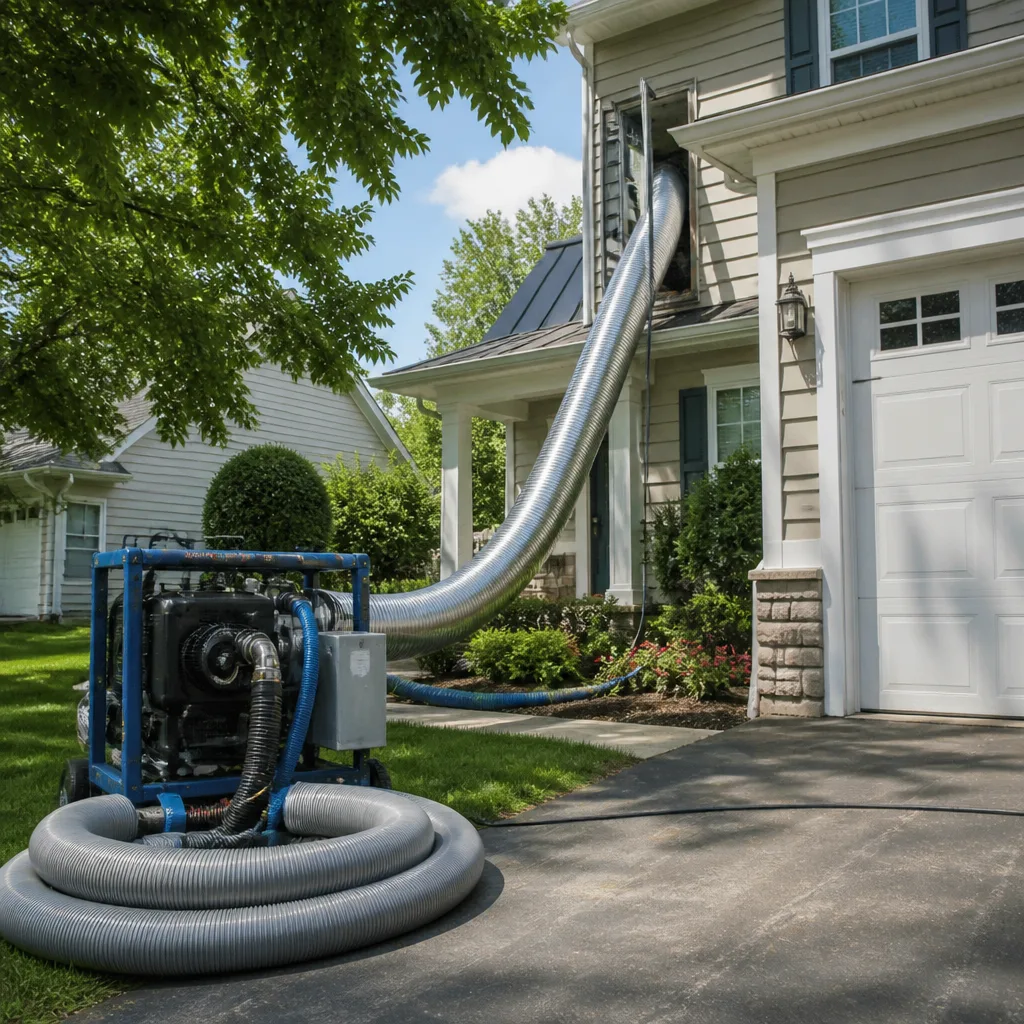 Whole-home duct cleaning
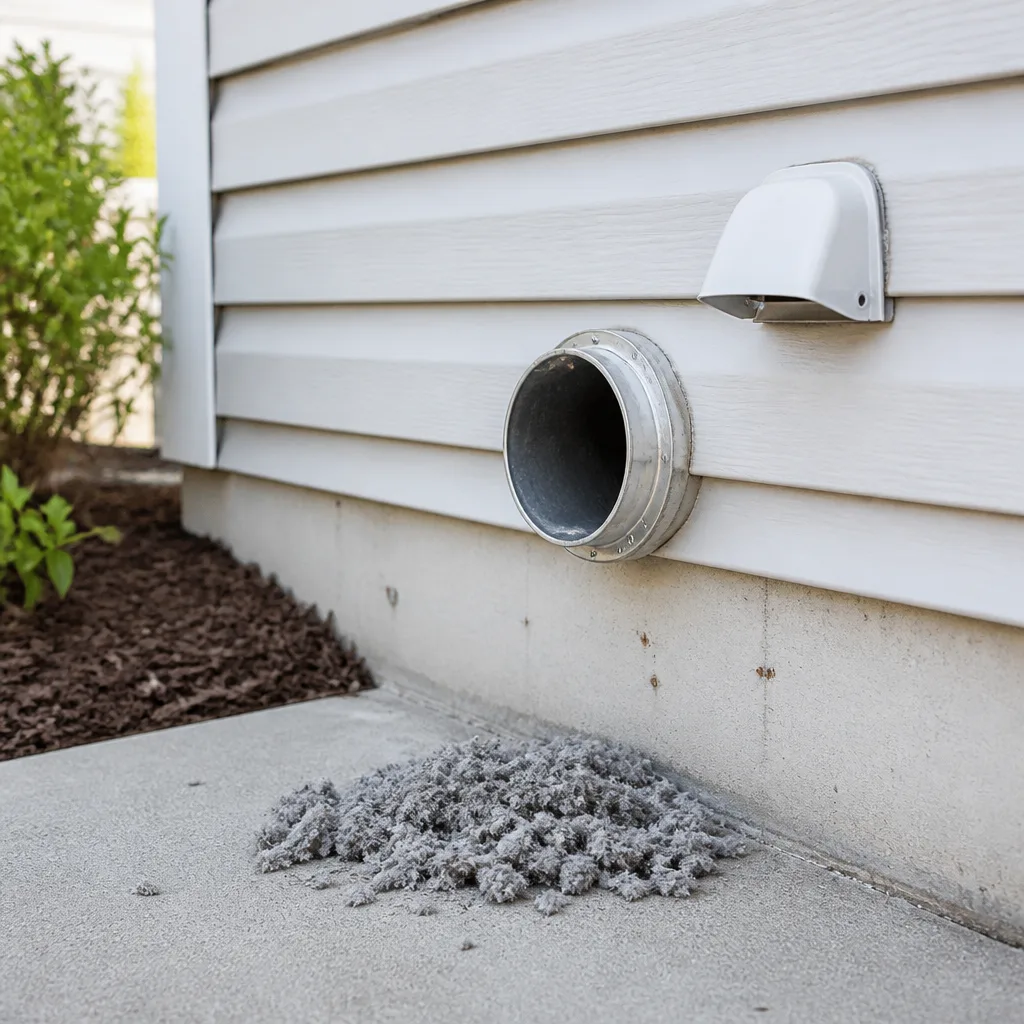 Dryer vent cleaning
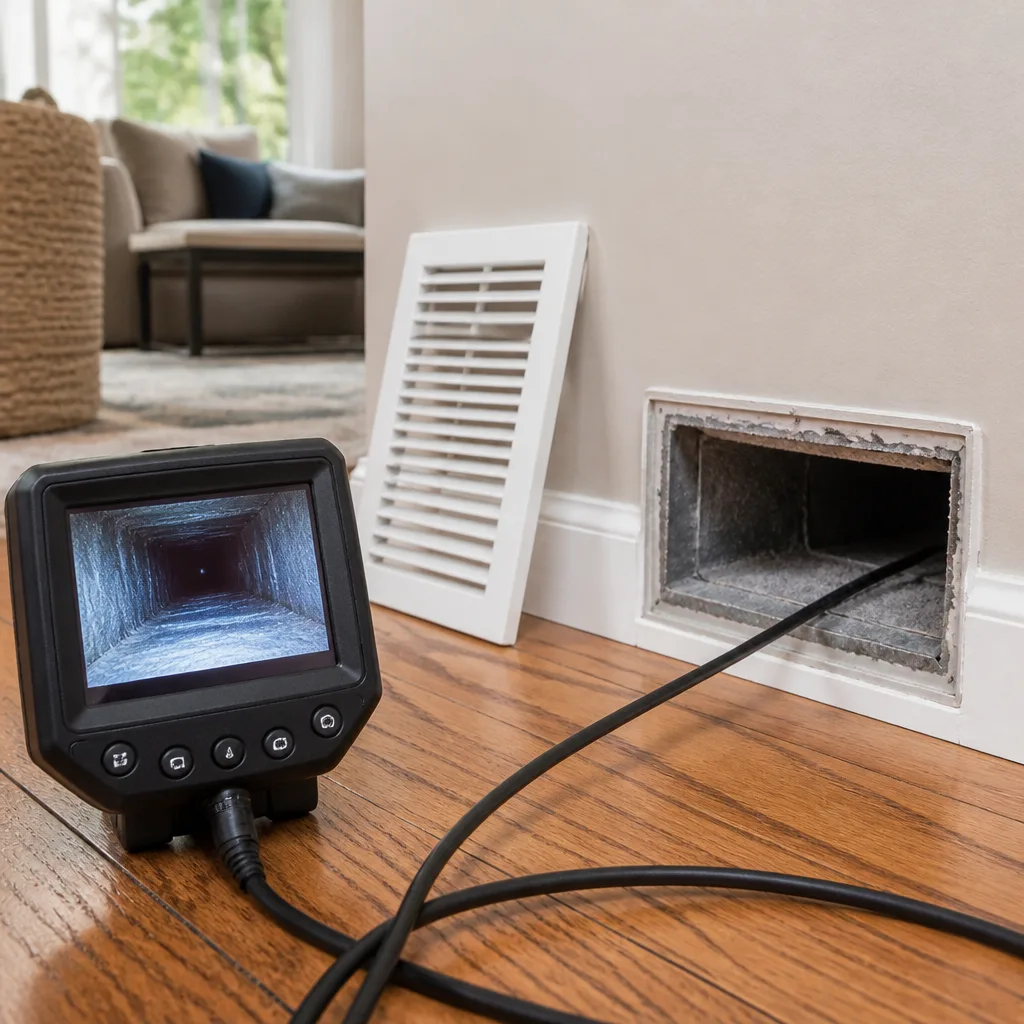 Camera inspection
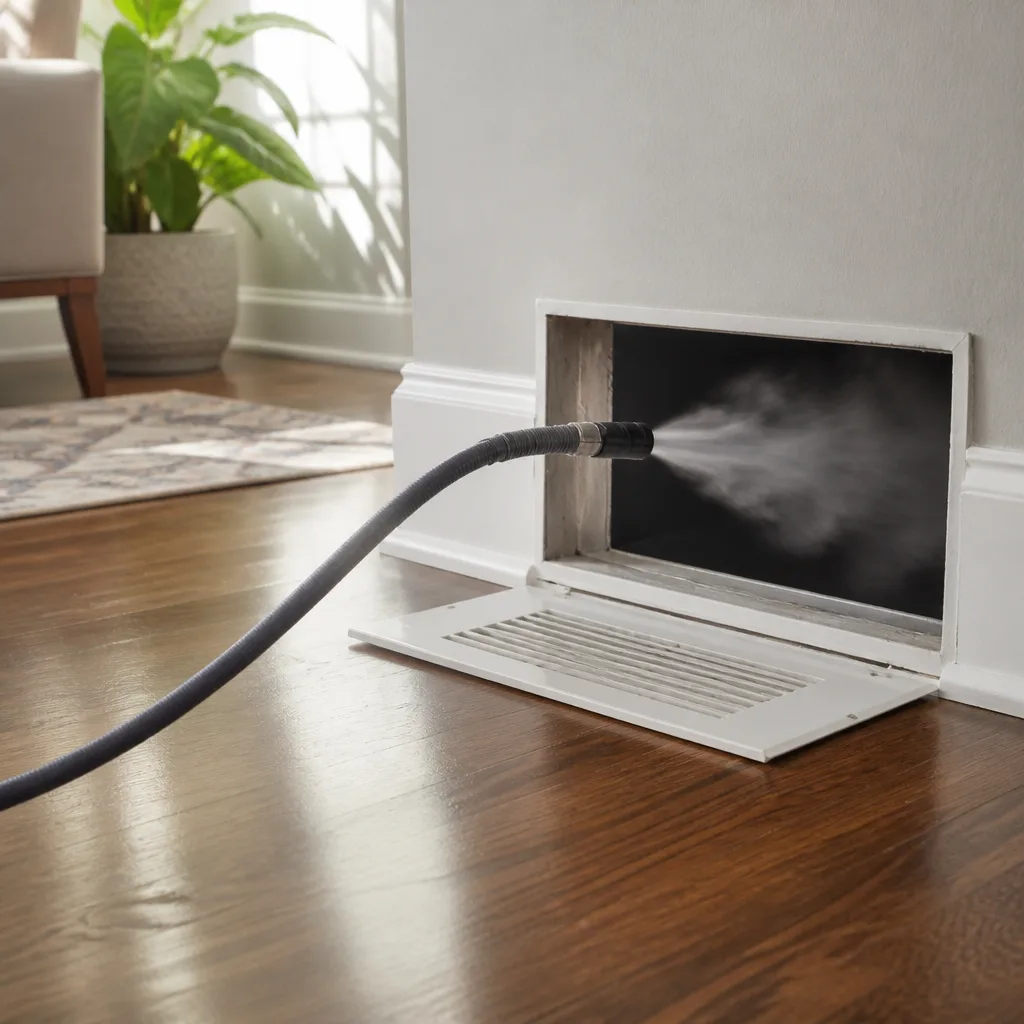 Sanitizing & deodorizing
Whole-system duct and dryer vent check with before-and-after photos - you see exactly what came out of your vents
That "$99 whole-house special" is a bait ad - the real number appears once they are in your hallway, or the "clean" is a shop-vac at the register. We photograph the inside of your ducts before and after instead.
Air Duct Cleaning Warning Signs: A Far Rockaway Homeowner’s Reference Guide
By the time you can smell mold from your vents or see debris on your registers, the contamination event inside the ductwork is already advanced. The warning signs that actually matter appear weeks earlier, and most of them are easy to miss if you don’t know what you’re looking at. In our experience working inside Far Rockaway homes, the subtle signals – a room that never quite heats, an odor that shows up only when the system starts, a cough that follows you from the living room to the bedroom – tell the real story long before visible buildup does. This guide walks through the mechanical and environmental warning signs trained technicians read first, why they matter in Far Rockaway’s housing stock, and what each one demands as a next step.
Quick Answer
The earliest warning signs of a duct problem in Far Rockaway are usually not visible mold or heavy dust – they’re subtle: uneven airflow between rooms, an odor that appears only when the HVAC kicks on, short-cycling in summer, sand or grit on registers after a storm, and allergy-type symptoms that correlate with the system running rather than the pollen calendar. Catching these early is what separates a cleaning job from a full duct repair and sanitizing job. If two or more of them show up together, it’s worth having the system inspected by a specialist who works on duct integrity, not just surface cleaning.
Styles & brands we work with
- Whole-home duct cleaning
- Dryer vent cleaning
- Camera inspection
- Sanitizing & deodorizing
Table of Contents
- Airflow Asymmetry: The Sign Most Homeowners Misread
- Reading the Odor Profile: Mold, Rodent, and Dust Burn-Off
- Why Summer Short-Cycling Often Points to the Ducts
- Post-Storm Warning Signs at Registers and Returns
- Health Pattern Signals: Duct-Driven vs. Seasonal Allergies
- Far Rockaway Housing Stock and Duct Risk by Neighborhood
- A Homeowner’s Inspection Checklist for Far Rockaway
- When It’s Past Warning Signs and Past Due
Airflow Asymmetry: The Sign Most Homeowners Misread
If one room in your Far Rockaway home consistently runs a few degrees off from the rest of the house, most people assume the furnace or the AC is failing. Often it isn’t. A duct section that has collapsed slightly, come loose at a joint, or filled with debris creates back pressure that starves the far rooms first – the ones at the end of the longest run. The equipment is doing exactly what it’s supposed to; the ductwork just isn’t getting the air there.
What makes this a genuine warning sign rather than a nuisance is the pattern. A failing blower or a bad thermostat tends to affect the whole house. A duct obstruction affects specific runs. The rooms above a finished basement, the bedroom over the garage, the kitchen farthest from the air handler – those are the rooms that show a duct problem before anything else does.
Here’s how to tell them apart:
- Whole-house symptom: every room is off, the system runs long, and the fan feels weak at every register. This points to the equipment.
- Room-specific symptom: most rooms are fine, one or two are consistently cold or warm, and the airflow at that register feels noticeably weaker by hand. This points to the duct run.
- Mixed symptom: the weak rooms worsen over weeks rather than appearing suddenly. That gradual drift is usually a duct section sagging or filling, not a mechanical failure.
In Far Rockaway, where many homes have had ductwork added, extended, or rerouted over the decades, the runs feeding the corners and the additions are the ones most likely to have a suspect joint. Walking the house with a hand in front of each register, in the same order, on a cool morning, gives you a baseline you can compare over time. If the weakness is progressing, that’s when a professional-grade inspection with a camera and a pressure reading earns its keep.
Airflow asymmetry is often the earliest signal we find in Far Rockaway homes, and it’s the one most likely to be treated with a new thermostat or a service call to the HVAC contractor instead of a duct inspection. Before you replace equipment, rule out the ductwork. Learn how an air duct cleaning inspection reveals these restrictions before you spend on parts.
Reading the Odor Profile: Mold, Rodent, and Dust Burn-Off
An odor is a symptom, but not all odors mean the same thing. Mold, rodent activity, and ordinary dust burn-off each produce a distinctive profile, and each demands a different next step. The mistake is to treat them as one problem and call for a generic cleaning – or, worse, to spray an air freshener over it and hope it fades.
Mold odor
Mold in ductwork smells damp, earthy, and slightly musty in a way that gets stronger when the system runs and fades when it’s off. It tends to concentrate near the return grille and the air handler rather than at the supply registers. Next step: the duct system needs inspection for the moisture source, not just the growth. Cleaning without finding the moisture returns. Sanitizing addresses the microbes; sealing and repair address the pathway that let moisture in.
Rodent odor
Rodent activity produces a sharper, more acrid smell – closer to old droppings and urine than to damp. It’s often strongest at floor registers and in ducts that run through crawl spaces, basements, and wall cavities. Next step: this is a contamination problem first and an odor problem second. Droppings and nesting material in a duct are a health hazard that needs proper containment during removal, which is why we use Abatement Technologies negative-pressure equipment – the debris doesn’t travel through the house while it’s being cleared.
Dust burn-off odor
The dusty, slightly metallic smell at the start of heating season is the most benign of the three. It’s dust settling on the heat exchanger burning off. If it clears within a day or two of first use, it’s normal. If it persists past the first week of heating or returns mid-season, that’s a sign the ductwork is passing more dust to the equipment than it should – a filter and cleaning matter, and sometimes a leaky return pulling from a dirty space.
Whatever the odor, don’t apply a scent product as a fix. It masks the signal without touching the source. If the smell changes with the system – stronger at startup, weaker at rest – that correlation alone is reason enough to have the ducts inspected.
Why Summer Short-Cycling Often Points to the Ducts
When an air conditioner cycles on and off every few minutes in a Far Rockaway summer, the first instinct is to blame the compressor or the refrigerant charge. Sometimes that’s right. But short-cycling has a second common cause that lives in the ductwork: restricted runs.
Here’s the mechanism. A central AC is sized to move a specific volume of air. If a duct run is partially blocked, kinked, or crushed, the system can’t move that volume. Static pressure builds, the evaporator coil gets less airflow than it needs, and the system either freezes up and shuts off on the safety, or it satisfies the thermostat quickly in the well-fed rooms and shuts down before the starved rooms ever get cool. The result is short cycles, cool rooms next to warm rooms, and a system that seems to be failing when it’s really being strangled by its own ducts.
Warning signs that point to ducts over equipment:
- The system cycles fast but the problem rooms never reach temperature.
- The cycling gets worse in the hottest weeks and eases when demand drops.
- Airflow at the return grille feels restricted by hand.
- The same pattern repeats after a refrigerant top-off or a filter change.
- You can hear whistling or hissing at the supply – that’s a pressure leak, not normal airflow.
Short-cycling from a duct restriction is an efficiency problem, but it’s also a wear problem. Compressors don’t like starting and stopping. Catching the restriction early protects both the wallet and the equipment. If a technician has already told you the AC is “fine” and the cycling continues, the ducts are the next place to look. Our team works inside the duct system with contractor-grade equipment, which is where the restriction actually sits.
Post-Storm Warning Signs at Registers and Returns
After a major weather event in Far Rockaway – heavy rain, wind, a coastal storm that drives water against the house – the duct system takes in what the envelope lets through. The first place you’ll see it is the registers and return grilles, and the signs are easy to read once you know what to look for.
Walk the house and check every register and return with a flashlight. Look for:
- Sand or grit on the supply vanes. If the return is pulling from a crawl space or a garage where wind-driven debris got in, it lands in the duct run nearest the grille.
- Rust or water staining on the grille or the duct metal behind it. Water infiltration through a roof, a wall, or a window frame can ride a duct run for feet before it drips somewhere visible.
- Musty odor on the first cool morning after the storm. Damp insulation inside a duct jacket holds moisture and starts to bloom within days.
- Loose insulation or a torn duct jacket. Storm-driven air entering an attic or crawl can pull insulation off ducts and leave the liner exposed and torn.
- A return grille that’s pulling noticeably harder or softer than before. A collapsed or dislodged section can change the pressure balance in ways you can feel at the return.
Moisture inside a duct is the critical variable. Dust is a nuisance; water plus dust is a mold problem on a timer. If you see water staining or smell damp after a storm, don’t wait for the smell to peak. This is the moment a dryer vent and duct check makes sense, especially because storm debris often winds up in dryer vent runs too – a fire risk many cleaners skip, and one we cover as part of a standard dryer vent cleaning visit.
Why the coastal storm pattern matters here
Far Rockaway’s position means storm-driven water and wind arrive with more force than in inland neighborhoods. The warning signs after a storm aren’t always dramatic. Often it’s just grit on the register and a faint smell that wasn’t there before. Both are reason enough for an inspection. Learn more about our air duct cleaning Far Rockaway service if you’ve just come through a weather event and want the system checked.
Health Pattern Signals: Duct-Driven vs. Seasonal Allergies
Allergy season in Far Rockaway runs on the calendar. Duct problems run on the HVAC. That difference is the key to telling them apart, and it’s a distinction most homeowners never make because both feel the same – sneezing, congestion, itchy eyes, a cough.
Here’s how to separate the two by the pattern rather than the symptom:
Timing
Seasonal allergies track the pollen calendar – worse in spring and early fall, better after rain, better on cool still days. Duct-driven issues track the system. Symptoms are worse when the HVAC is running, and they ease when the system is off for a stretch. If you feel better in a week away from home, that’s a strong signal the indoor environment – not the outdoor one – is the driver.
Location in the home
Seasonal allergies follow you outdoors and ease when you come inside. Duct-related symptoms often concentrate in specific rooms – the bedroom nearest a return, the room where a supply register blows directly on a bed, the basement office. If one room reliably triggers symptoms and another doesn’t, the room with the return or the register is the one to inspect.
Correlation with HVAC cycles
This is the strongest discriminator. If you can tie a symptom flare to the moment the system kicks on, or to the minutes right after startup when dust gets stirred up, the ductwork is the suspect. A simple test: run the fan on continuous for a day, note how you feel, then leave it off for a full day and note again. A pattern that flips with the fan is a duct signal, not a pollen signal.
We want to be careful here. We’re not doctors, and we don’t diagnose health conditions. What we can say is that the pattern above is the one technicians learn to ask about, because it’s the one that points back to the duct system. If the pattern holds, an inspection is the reasonable next step. If you’re already working with an allergist, ask whether the indoor environment has been ruled out. Learn more about the air quality and sanitizing side of this work if the pattern points to microbial contamination.
Far Rockaway Housing Stock and Duct Risk by Neighborhood
Far Rockaway’s housing stock isn’t uniform, and neither is the duct risk. The type of home, the age of the system, and how the ductwork was originally laid out all shape which warning signs appear first. Here’s how it breaks down by neighborhood, from the perspective of what we actually find when we open up a system.
Wavecrest and the older detached homes
Many of the older detached homes in Wavecrest have original or heavily modified ductwork, sometimes in more than one generation of construction. The system may have started as gravity heat, been converted to forced air, and had runs added later. Those added runs are often the ones with the worst joints and the thin insulation. Airflow asymmetry in these homes is common, and so are leaky returns pulling dust from crawl spaces.
Far Rockaway and Edgemere
The denser housing in Far Rockaway proper and Edgemere tends to have shorter duct runs, sometimes running through tight wall cavities or drop ceilings. Short runs hide restrictions well – the system feels fine at the register even when a section is packed – but they also show mold and moisture faster because there’s less air volume to dilute it. Odor signals in these homes tend to appear before airflow signals.
Bayswater and the newer developments
Newer construction in Bayswater usually has cleaner ductwork in better condition, but that’s not the same as problem-free. New systems still pick up construction debris, and builder-grade flexible duct can sag or pinch if it was installed with a tight bend. Post-renovation warning signs – dust on the registers, a smell of construction dust when the system starts – are the common ones here. After a major renovation, a cleaning is worth scheduling before the first full heating season.
Neponsit and Belle Harbor
The homes in Neponsit and Belle Harbor often have larger systems with longer runs and more returns. That’s more ductwork to inspect, and more places for a restriction or a leak to hide. The warning signs here tend to be subtle – a room that’s slightly off, a return that pulls louder than it should – and they often show up later than in the smaller homes. It’s worth checking the return side specifically, because a leaky or dirty return is the most common source of the dust that keeps coming back.
Across all of these neighborhoods, the pattern is the same: the warning signs are mechanical and environmental first, visible and dramatic later. Our technicians have up to 14 years of experience reading these signals in Far Rockaway homes, and we use professional-grade equipment because the standard inside a duct system is higher than the standard a shop vac can reach. We also work with Honeywell and Aprilaire air-quality systems, which matters when the solution includes a filtration or humidity component. Our HVAC cleaning service covers the equipment side once the ducts are addressed.
A Homeowner’s Inspection Checklist for Far Rockaway
You don’t need to open a duct to catch the early warning signs. A flashlight, a hand, your nose, and a little patience over a few days will give you a solid read. Here’s the checklist we’d suggest running once a season, and again after any major storm or renovation.
- Walk the registers with the system running. Put your hand in front of each supply. Note any that feel weak, and any that whistle or hiss. Compare them room to room, in the same order every time.
- Stand at the main return. Feel the pull with your hand. A return that’s much louder or weaker than it used to be is a pressure-change signal, not a nuisance.
- Smell the air at startup. Turn the system from off to on and take a breath near the return. Note the smell. Musty, acrid, and dusty-metallic each mean something different.
- Look inside the grilles with a flashlight. Look for dust buildup on the vanes, sand or grit, water staining, and any sign of pests. Look at the duct metal behind the grille, not just the surface.
- Note the room temperature pattern. Take a thermometer into every room on a cool morning. Rooms more than a few degrees off from the average are the ones to inspect.
- Watch the summer cycling. Time a few on-off cycles on a hot afternoon. If the system cycles fast and the off-rooms never get cool, put a duct restriction on the suspect list.
- Track the health pattern. If you’re sneezing more indoors than outdoors, or worse in one room than another, note it. The pattern is the data.
- After any major storm or renovation, repeat the walk. Add a specific check of the return grille and the dryer vent for debris.
If two or more items on this list come back positive, that’s the point to call a specialist. One positive item is often just the season. Three is a system telling you something.
When It’s Past Warning Signs and Past Due
Some signs aren’t early warning signals. They’re evidence the problem is already here, and they move the job from “worth inspecting” to “worth scheduling now.” If you see any of these, don’t wait for the next seasonal check:
- Visible mold growth on a register, a grille, or the duct metal behind them. This needs containment and proper sanitizing, not a spray bottle from the hardware store.
- A persistent musty or acrid smell that doesn’t lift with ventilation. That’s growth or pest activity inside the system.
- Pest droppings or nesting material visible at a register. This is a health matter that needs remediation-level containment during removal.
- Water staining on ductwork after a storm or a roof leak. Water plus dust becomes a mold problem on a timer.
- A dryer that takes two cycles to dry a load. A restricted dryer vent is a fire risk and one of the reasons we include dryer vent cleaning as a standard part of the work.
- Debris blowing out of a supply register when the system starts. That’s active contamination and it needs a professional-grade cleaning, not a consumer filter change.
In these cases, the right sequence is inspection first, then cleaning, then repair and sealing if the inspection turns up leaks or damaged sections, then sanitizing. One call covers all of it, which is the practical reason we built the service that way. When we find a collapsed section during a cleaning, we fix it as part of the same job instead of leaving the homeowner to find a second contractor.
Common Mistakes to Avoid
- Treating an odor with a scent product. A plug-in or a spray masks the signal, not the source. The musty smell will be back inside the week, and the moisture problem driving it will have had another week to grow.
- Replacing the AC when the ducts are the problem. Short-cycling and uneven cooling get blamed on the equipment in most Far Rockaway homes. Rule out a duct restriction before you authorize a new compressor or a new system.
- Hiring on the lowest price alone. A low bid on a duct cleaning is often a per-vent teaser that becomes a much larger invoice once the technician is inside. Ask for one flat price per system, agreed before work starts.
- Cleaning without addressing the leak. If the inspection finds a broken joint or a torn duct jacket, cleaning alone leaves the problem in place. Repair and sealing belong in the same job, or you’ll be back inside the same ducts next season.
- Skipping the return side. The return is where most of the dust that ends up on your registers comes from. A cleaning that touches only the supplies misses the source.
- Ignoring the dryer vent after a storm. Storm debris that winds up in a dryer run is one of the quieter fire risks in a home. It’s a two-minute check with a flashlight and worth doing after every major weather event.
- Assuming a renovation is done when the dust settles. Construction dust settles in the returns and the supply boots, and it comes out for months. A cleaning after a major renovation is standard practice, not an upsell.
See the difference
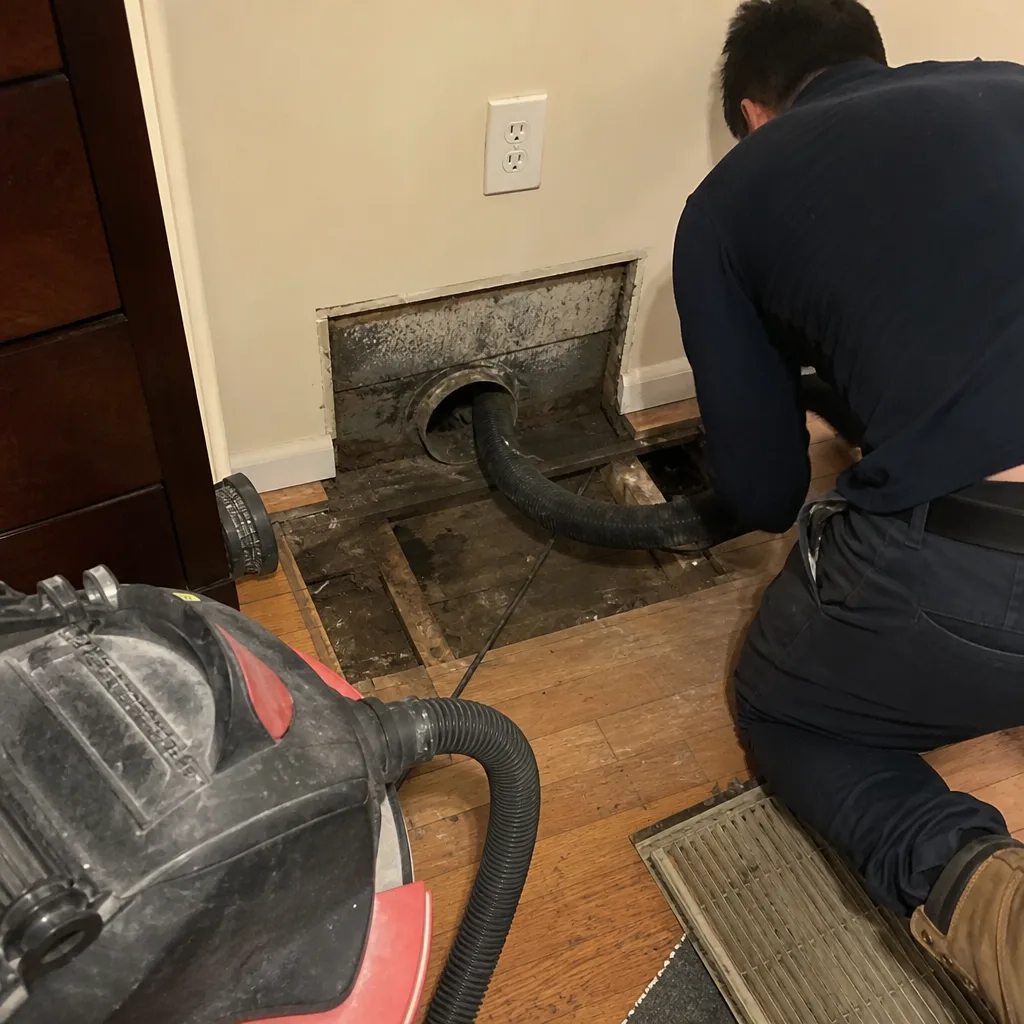 Before
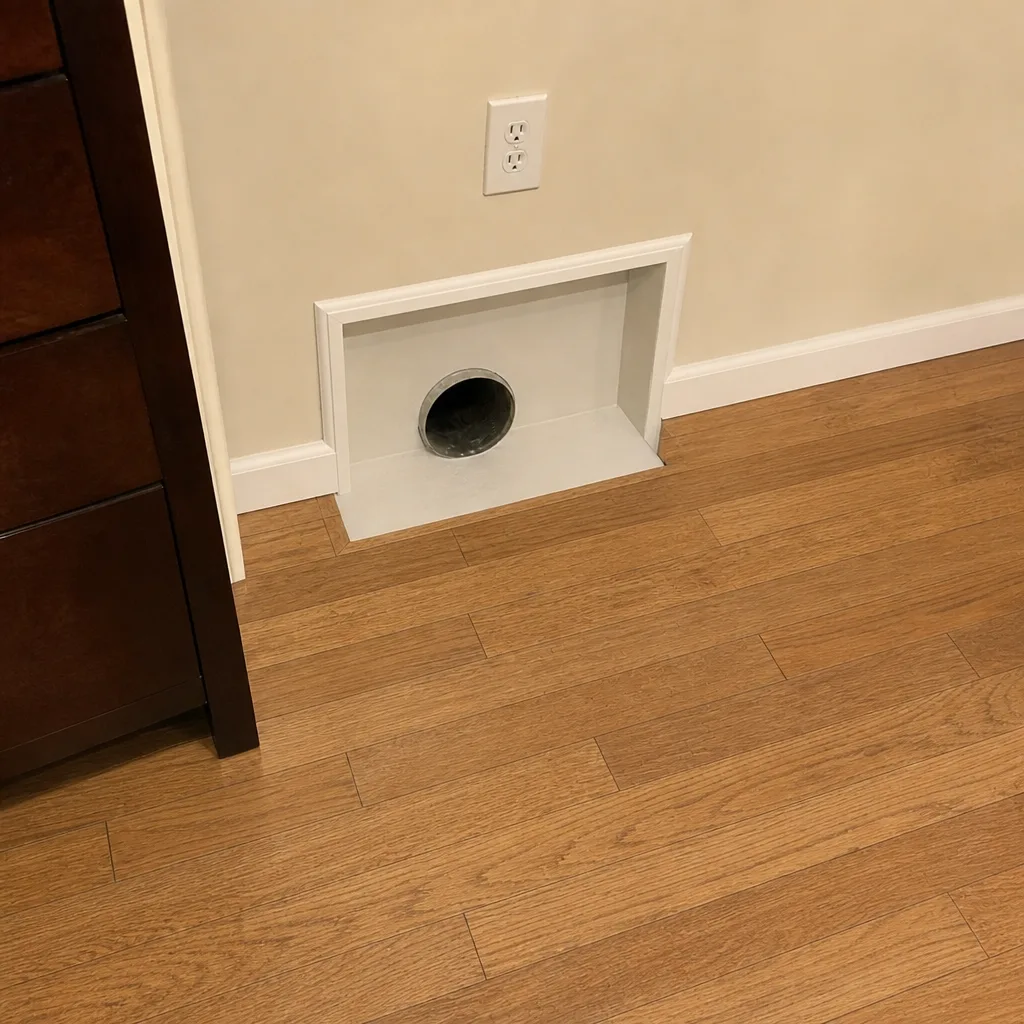 After
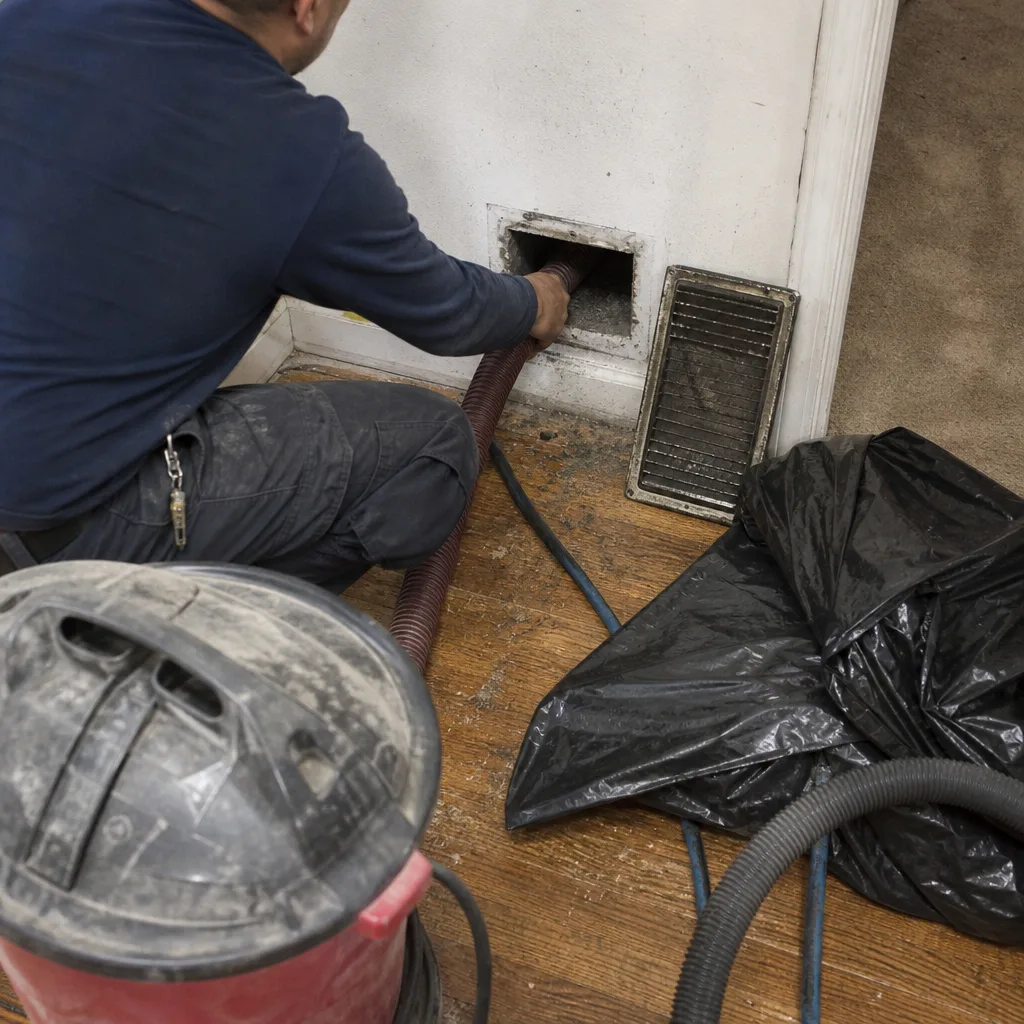 Before
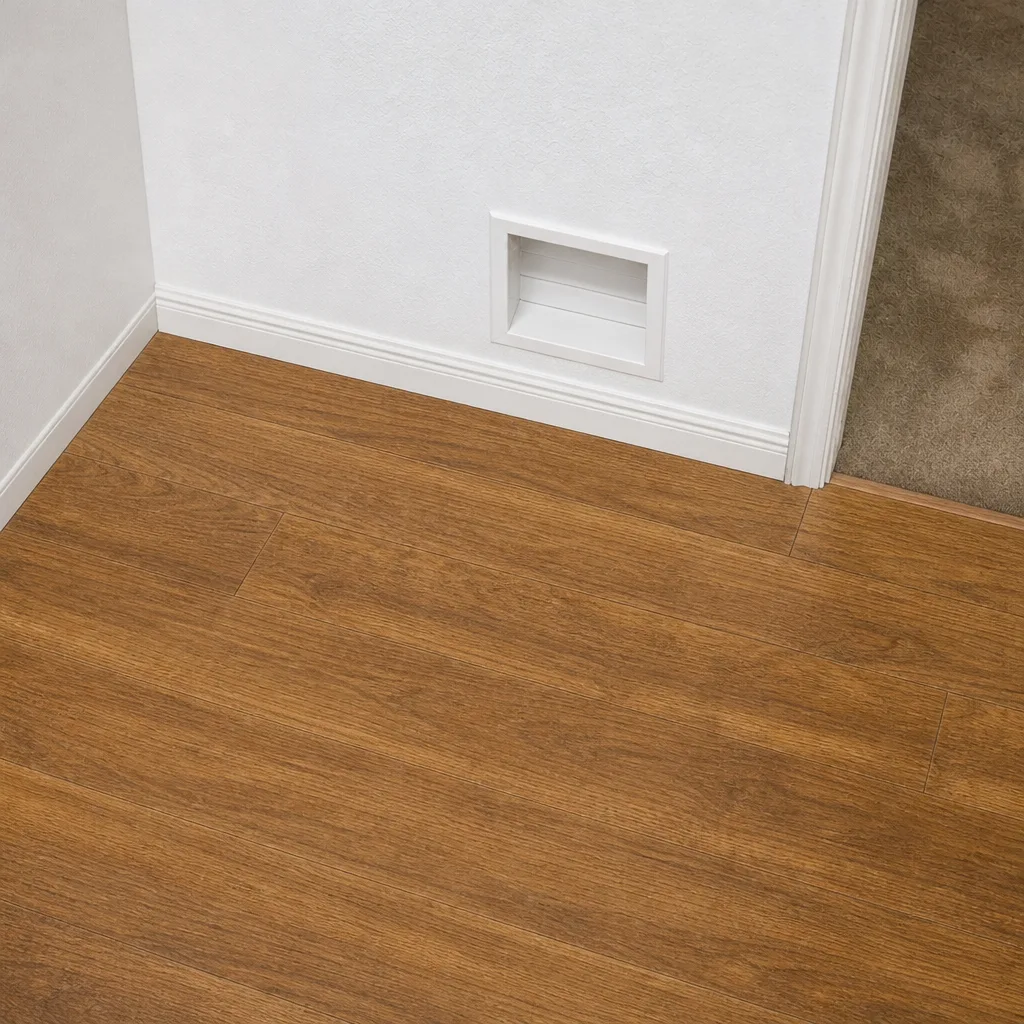 After
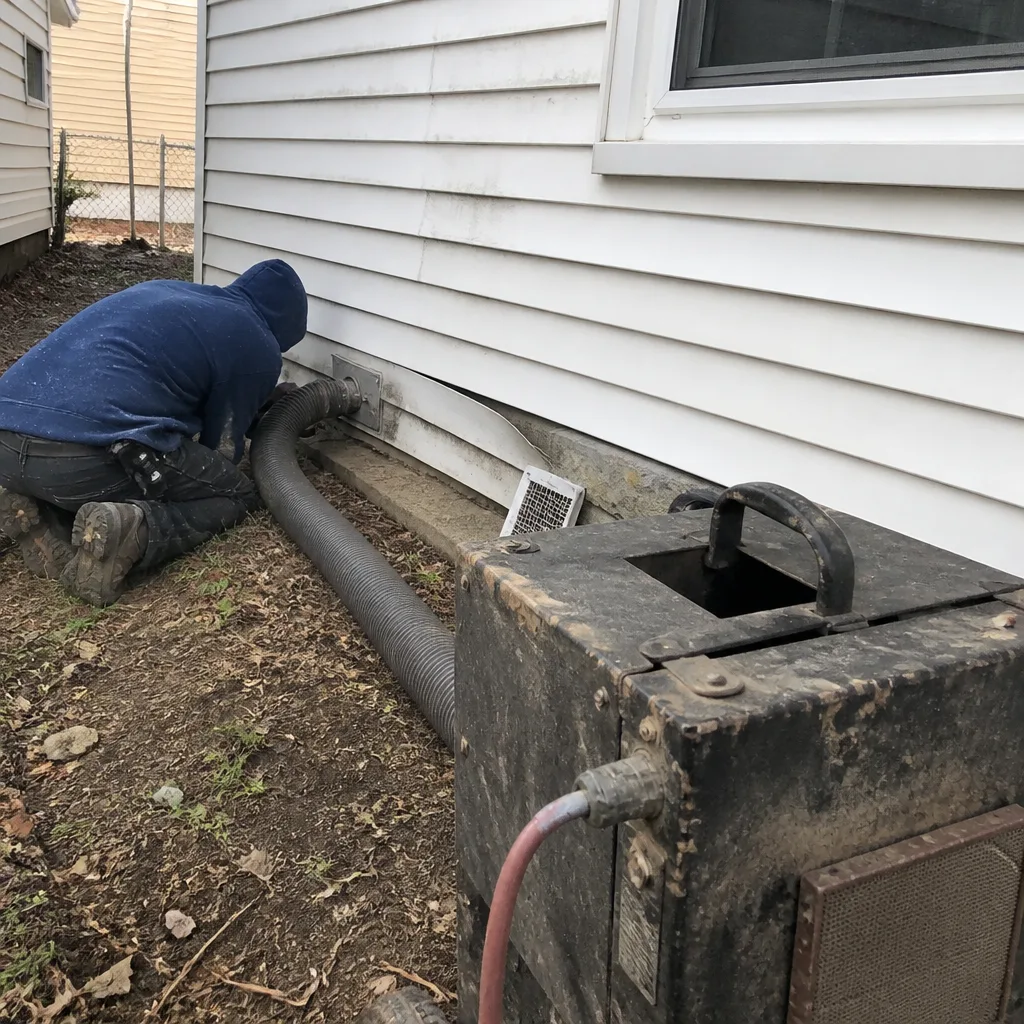 Before
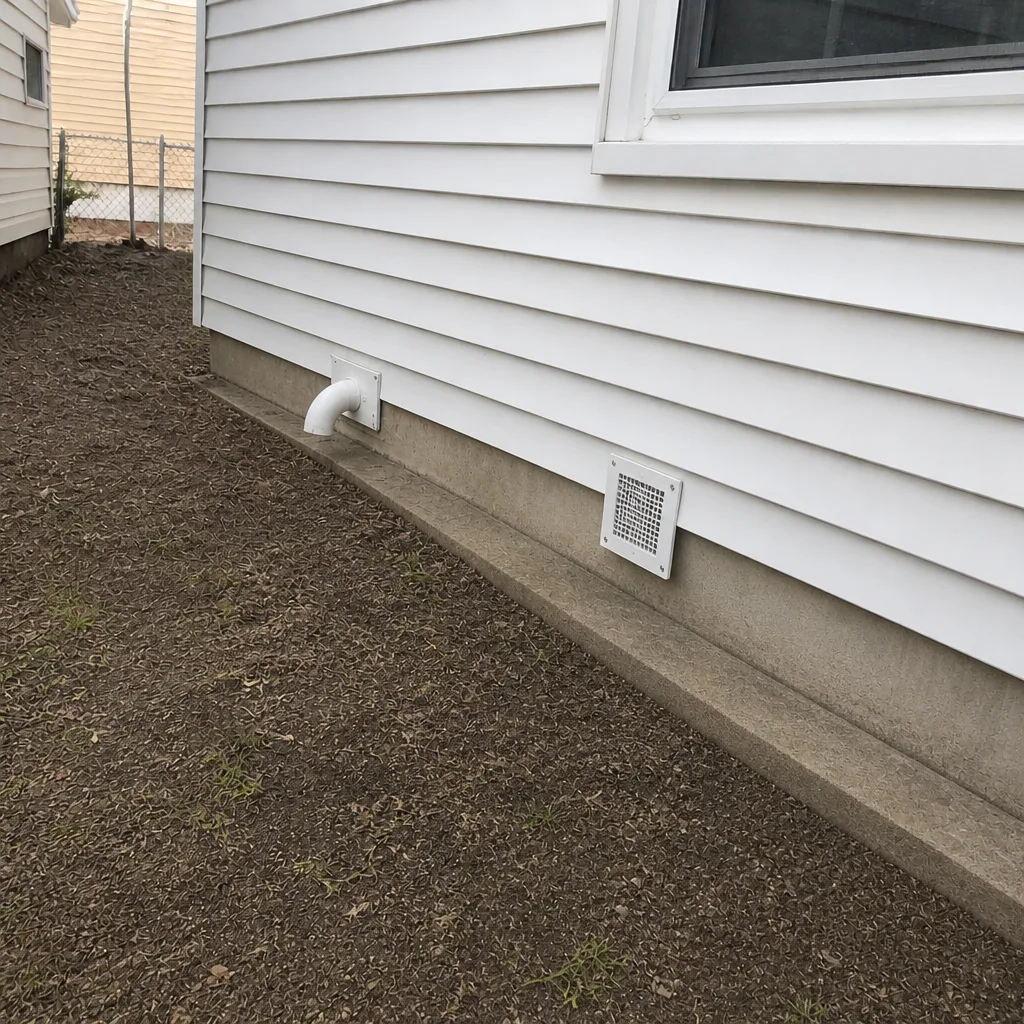 After
When to Call a Professional
Call a specialist when the pattern is consistent, not when the symptoms are obvious. Three or more warning signs together, a health pattern that flips with the HVAC cycle, a storm that left water or grit in the registers, or visible contamination that needs containment during removal – those are the cases where a professional-grade inspection pays for itself. A flashlight walk by a homeowner catches a lot. It doesn’t catch a collapsed run behind drywall, a leaky joint inside a wall cavity, or a moisture problem feeding growth in a section you can’t see. Air Duct Cleaning Far Rockaway offers free estimates in Far Rockaway – call (877) 792-6089. We answer 24/7. Fast dispatch from 7am to 7pm, Sunday through Friday.
Frequently Asked Questions
The earliest signs are usually subtle: uneven airflow between rooms, an odor that appears only when the HVAC starts, short-cycling in summer, and allergy-type symptoms that follow the system rather than the pollen calendar. Visible mold and heavy dust come later, after the contamination has had time to build. If you notice any of the early signs together, an inspection is worth scheduling before the problem spreads. Call (877) 792-6089 for an exact quote – estimates are free.
The honest answer is that the price depends on the size of the system, the number of runs, and what the inspection finds – which is why a legitimate provider prices per system, not per vent. A low teaser bid for a vent count is the industry’s most common bait-and-switch. Ask for one flat price per system, agreed before work starts, with before-and-after photos of your own ducts included. Call (877) 792-6089 for a free estimate and a written price for your specific system.
The cheap quotes are usually a different scope than they appear – a per-vent price that becomes a much larger invoice once the technician is on site, or a shop-vac level cleaning that leaves the return side untouched. Professional-grade equipment from Rotobrush, Nikro, and Abatement Technologies costs more to run than consumer gear, and it reaches places a shop vac can’t. Ask any provider what equipment they use and whether they quote per system or per vent. Call (877) 792-6089 if you want a straight answer on a system-sized quote.
Ask for before-and-after photos of your own ducts, taken inside the system, not stock images of a generic job. A provider confident in the work will show you the interiors of the runs they cleaned, including the return side. Ask also whether the work included repair and sealing if the inspection found a problem, because a cleaning that leaves a broken joint in place hasn’t solved anything. Call (877) 792-6089 to schedule an inspection and see what we find before any work is authorized.
Storm frequency and moisture are the main drivers here, more than temperature. Wind-driven rain against the house finds its way into wall cavities and crawl spaces, and ducts that run through those spaces pick up moisture and debris. A post-storm inspection for water staining, grit, and odor is worth doing after any major event. In our experience, the year a coastal storm comes through is the year a routine check is worth moving up. Call (877) 792-6089 for a post-storm assessment.
For most homes, the answer is inspection-based rather than calendar-based. A home with no warning signs and a clean filter history may go years between cleanings. A home that’s had a renovation, a pest issue, a storm-driven moisture event, or pets and high dust load benefits from a check more often. The warning signs in this guide are the real schedule. If two or three of them show up together, that’s the signal to inspect rather than wait for a set interval. Call (877) 792-6089 for a free estimate on an inspection.
The Bottom Line
The early warning signs of a duct problem show up in patterns, not in visible mess. Uneven airflow between rooms, an odor that follows the HVAC cycle, summer short-cycling, sand or water staining after a storm, a health pattern tied to the system instead of the season – those are the signals that buy you time to fix a small problem before it becomes a repair, a sanitizing, and a cleaning all at once. Keep the seasonal checklist, check the return side, and don’t let a scent product stand in for an inspection. When the pattern is consistent, get a professional read. Better air starts with what you can’t see, and the earlier you catch it, the simpler the fix.
Clean ducts are only half the job. When we’re inside your system, we’re also looking at the joints, the insulation, the return side, and the dryer vent – because a leaky joint or a restricted vent will undo a cleaning faster than anything else. That’s the difference between a cleaning and a repair. Rotobrush, Nikro, and Abatement Technologies equipment is the standard we work to, and the reason a proper inspection sees what a flashlight walk can’t.
Call Air Duct Cleaning Far Rockaway at (877) 792-6089 for a free estimate. We answer 24/7. Fast dispatch from 7am to 7pm, Sunday through Friday. A call outside dispatch hours is booked into the next opening, Sunday through Friday, 7am to 7pm. Our technicians have up to 14 years of experience, and the price is set per job by a written estimate agreed before any work begins.
Written by the team at Air Duct Cleaning Far Rockaway.