
Last updated November 22, 2026
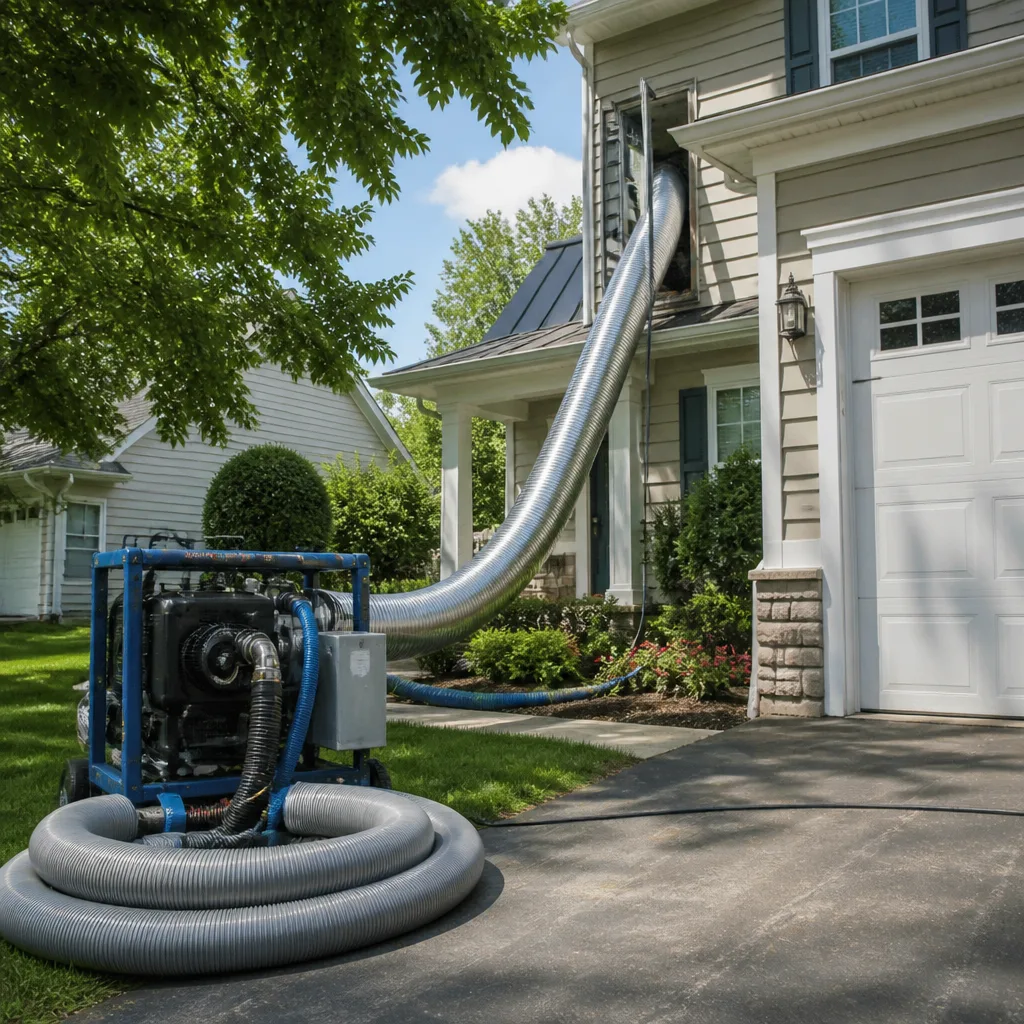 Whole-home duct cleaning
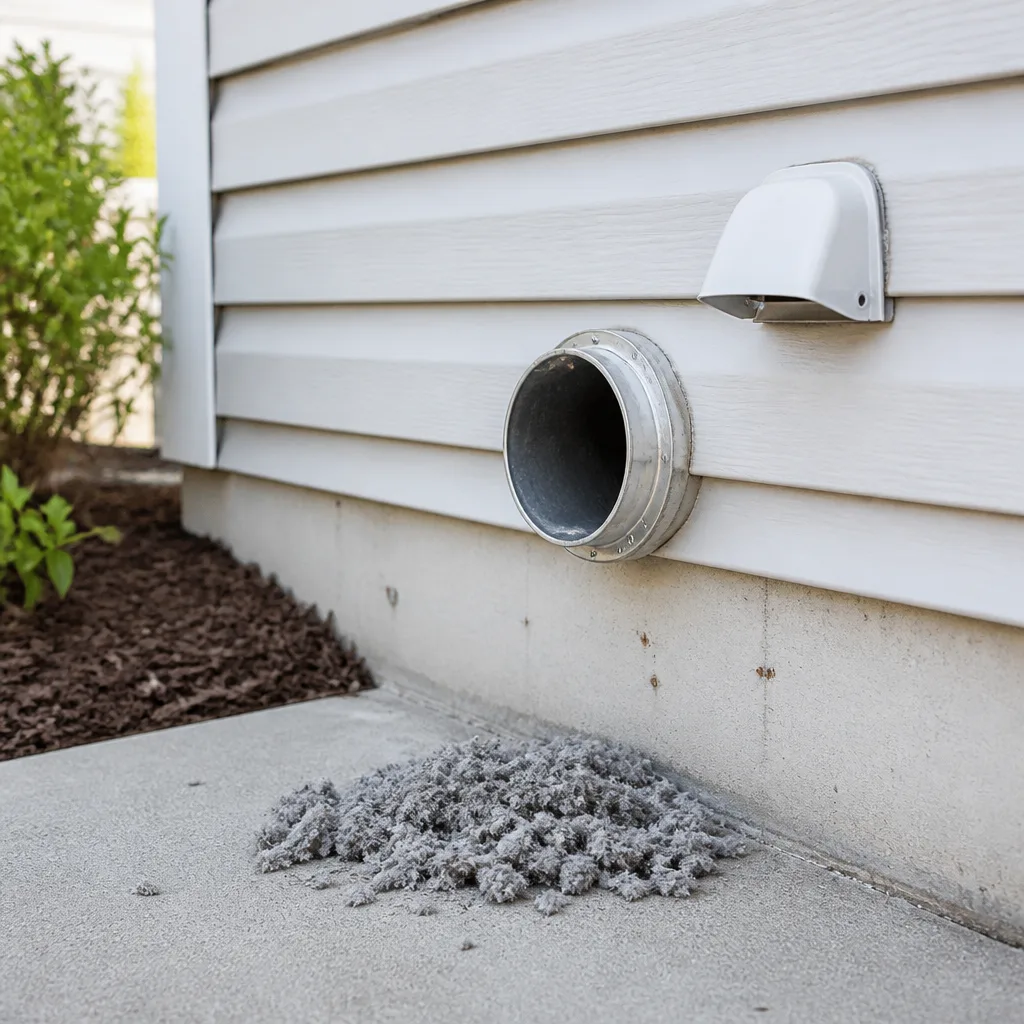 Dryer vent cleaning
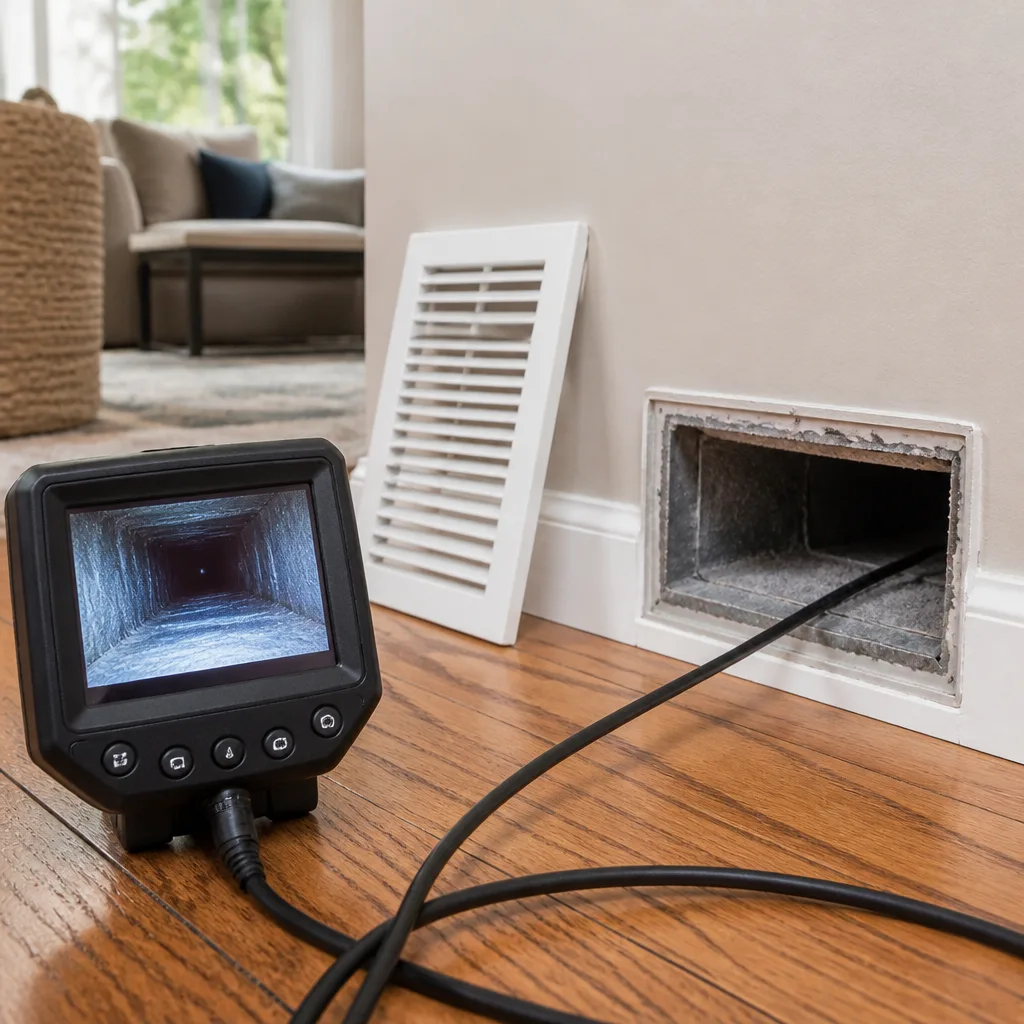 Camera inspection
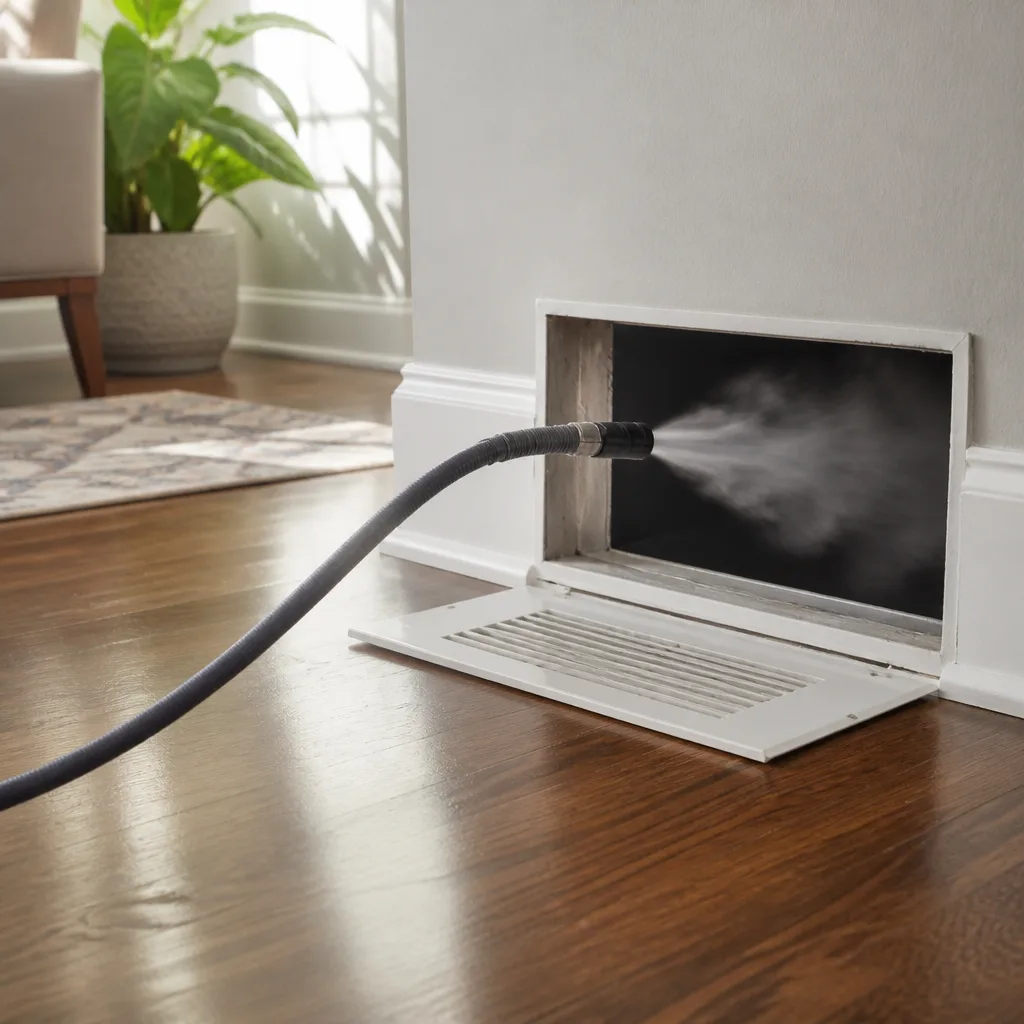 Sanitizing & deodorizing
Whole-system duct and dryer vent check with before-and-after photos - you see exactly what came out of your vents
That "$99 whole-house special" is a bait ad - the real number appears once they are in your hallway, or the "clean" is a shop-vac at the register. We photograph the inside of your ducts before and after instead.
Air Duct Cleaning Maintenance Checklist for Far Rockaway Homeowners
Most homeowners treat duct cleaning as a one-time event: book it, forget it, book it again five years later. That’s the wrong model. A cleaning means nothing if you’re not tracking the conditions in between, and in Far Rockaway, where a large share of the housing stock went up before 1980, the failure points tend to hide inside walls rather than announce themselves. Flex duct cracks, condensation collects, a storm pushes moisture into a return, and the first sign anyone notices is a smell or a flare of allergies. This guide gives you a working checklist: what to check monthly, what to check seasonally, what to document between professional visits, and when a small observation is a service call. We’ve built it around the specific ways Far Rockaway homes fail.
Quick Answer
A duct maintenance checklist for a Far Rockaway home should cover three rhythms: monthly checks of filters, registers, and startup odors; seasonal checks tied to summer humidity and post-storm intrusion; and a full professional cleaning and inspection every three to five years, sooner in older homes with flex duct. The point isn’t the cleaning itself. It’s logging the conditions between cleanings so you catch a disconnected duct or a condensation problem before it becomes a remediation job.
Styles & brands we work with
- Whole-home duct cleaning
- Dryer vent cleaning
- Camera inspection
- Sanitizing & deodorizing
Table of Contents
- The Monthly Check: Five Minutes That Catch Most Problems
- Seasonal Checkpoints for Far Rockaway Homes
- Why Flex Duct in Older Far Rockaway Homes Fails Quietly
- What to Document Between Professional Visits
- Humidity, Condensation, and Summer Supply Ducts
- Post-Storm Inspection Protocol
- When a Maintenance Check Becomes a Service Call
- What a Professional Visit Should Actually Include
The Monthly Check: Five Minutes That Catch Most Problems
You don’t need tools for the monthly pass. You need a routine and somewhere to write down what you see. Do this on the same day each month, ideally right after the system has run for a while so any smell is present.
- Pull the filter and hold it to a light. If you can’t see through it, replace it. Note the date you changed it, because the interval that matters is your home’s interval, not the one printed on the package.
- Walk every register with a flashlight. Look for dust streaks radiating from the grille, dark smudges on the ceiling around the frame, or visible debris sitting on the vanes. Streaking at a register often means air is escaping around the boot rather than through it.
- Listen at startup. Turn the system on and stand near a few registers. A rattle, a whistle, or a whoosh that’s louder at one vent than the others is air finding a path it shouldn’t.
- Smell the first minute of air. A musty or dusty smell that fades after a minute is normal stagnation. A smell that persists, or that smells wet, is not.
- Check the return grille for dust matting. A return that’s visibly loading up with lint is pulling more than it should from the living space.
Log each of these in a notebook or a note on your phone. Three months of entries tells a technician more than any single visit to your hallway. And it tells you whether the change you’re seeing is a trend or a one-off.
Seasonal Checkpoints for Far Rockaway Homes
The peninsula’s climate gives you two distinct stress windows. Summer brings humid air that meets cold duct surfaces. Late summer and fall bring the storm season, and a house that takes on water in a basement or crawl space will push that moisture into the return system before anyone sees a puddle.
Spring: before cooling season
- Replace the filter one last time before the system switches to cooling duty.
- Walk the basement, crawl space, and any utility closet where duct runs pass through. Look for rust stains, water rings, or sagging insulation on the duct jacket.
- Confirm the condensate line drains freely. A slow drain in humid weather is a moisture source sitting next to your ductwork.
Summer: the humidity window
- Feel the supply registers on a hot, sticky afternoon. Cold air plus condensation on the outside of a register or boot points to an insulation or sealing problem.
- Check for damp spots on ceilings or walls directly above a duct run.
- Watch for a musty smell that appears only on humid days and disappears when the air dries out.
Fall and winter: heating season
- Note any burnt or dusty smell in the first heat cycle of the year. Some dust burn-off is normal on the first run. A smell that repeats every cycle is not.
- Check that register airflow is even room to room. Cold rooms at the far end of a run are the classic early sign of a partial disconnect.
- After any storm that brings water into the house, run the post-storm protocol below before you run the system normally again.
Why Flex Duct in Older Far Rockaway Homes Fails Quietly
A lot of Far Rockaway housing built before 1980 has been retrofitted over the decades, and flex duct is usually what went in. It’s fast to install and it works well when it’s properly supported. It also fails in ways you can’t see from the living room.
Flex duct is a plastic inner liner wrapped in insulation and an outer jacket. The liner can sag between supports, and a sag creates a low point where condensation collects. The liner can tear at a connection where it’s pulled too tight around a collar. And the whole assembly can separate at a joint inside a wall cavity or a soffit, which is exactly where nobody looks.
The symptoms of a duct that’s collapsing or disconnected inside a wall
- One or two rooms get noticeably weaker airflow while the rest of the house is fine.
- The system runs longer to reach the same temperature it used to reach easily.
- You hear a hiss or a rush of air inside a wall or above a ceiling when the blower runs.
- A room feels stuffy even with the register open, or the register has almost no detectable airflow.
- Dust reappears on surfaces in one room faster than everywhere else.
None of these prove a disconnect. All of them justify a look, and a look means someone getting into the duct system with a camera and a blower, not just vacuuming grilles. This is where a maintenance mindset pays off: you catch the sagging run in year two instead of discovering a fully separated duct after a season of pulling attic or wall-cavity air into your supply.
What to Document Between Professional Visits
This is the part almost everyone skips, and it’s the part that makes a professional visit worth more. When a technician arrives with three months of your notes, they can diagnose instead of guess.
Photograph the same things every month
- Each register, straight on, from the same distance. Streaking and smudging show up as a change over time.
- The filter, held up to a light source, before you replace it.
- Any water stain, sag, or discoloration on duct jackets or near a boot.
- The return grille. Dust matting builds visibly.
Keep an odor log
Write down the date, the time of day, the weather, and which rooms the smell was strongest in. “Musty, upstairs hallway, strongest on humid afternoons” is a usable data point. “Smells weird sometimes” is not.
Track allergy and symptom patterns
Note when symptoms flare and whether they correlate with the system running, with a season, or with a specific room. You don’t need a medical explanation. You need a pattern. A pattern that repeats in the same room, on the same schedule, is a pattern a technician can work with.
Note the small stuff
Rattles, whistles, the month the system started running longer, the room that never quite warms up. Write it down the day you notice it. Memory compresses a season of small changes into “it’s always been like that.”
Humidity, Condensation, and Summer Supply Ducts
Cold air inside a duct in a humid house is a condensation machine. In Far Rockaway summers, the gap between outdoor humidity and a chilled supply duct is wide enough that any break in the duct’s insulation or air sealing turns into a wet spot, and a wet spot in a dark duct is where microbial growth starts.
What to check without opening anything:
- Register and boot surfaces. Condensation on the outside of a metal boot on a humid day points to missing or wet insulation in the boot or the run feeding it.
- Ceiling and wall stains near runs. A faint water ring above a duct path in summer is a condensation issue, not a roof issue, more often than people assume.
- The musty smell test. Smell that’s strongest in the first ten minutes after the system starts and fades after is air passing over wet material and then drying out. It doesn’t mean the duct is dirty. It means something in the path is damp.
- Basement and crawl space humidity. If the space the ducts run through is damp, the ducts are breathing damp air. A dehumidifier in that space is often the cheapest fix in the whole checklist.
Damp ductwork needs more than a vacuum. It needs the source of the moisture found and the system sanitized and dried, which is why we pair cleaning with air quality and sanitizing work rather than treating them as separate jobs. Guardsman-level surface protection is part of that sanitizing step.
Post-Storm Inspection Protocol
Any storm that moves water into the house is a duct event even if the ductwork is dry. Here’s the order to work in.
- Stop running the system if water is present anywhere near the air handler or a duct run. Running a blower pulls moisture and contamination into the supply side.
- Photograph everything before cleanup. Water lines, wet insulation, staining on duct jackets.
- Check the return side first. Returns are usually lower and take on moisture first.
- Let the duct system dry fully before running it normally. Moisture trapped in insulation doesn’t dry with the blower running.
- Book an inspection before the next heating or cooling season. Storm intrusion into a duct system is a remediation question, not a routine cleaning question, and containment matters. That’s where Abatement Technologies negative-pressure containment and HEPA-level filtration come into the work.
When a Maintenance Check Becomes a Service Call
Most monthly observations are normal variation. A little dust on a register in a house with pets is expected. A slightly musty smell in a closed-up room is expected. Here’s the line.
Normal variation
- Even, light dust on registers that wipes off cleanly.
- A faint dusty smell on the first heat cycle of the season.
- Airflow that’s slightly different room to room in a house with a long duct run.
Call for service
- Airflow at one register that’s dropped noticeably and stays down.
- Any musty or wet smell that repeats.
- Visible water staining, sagging, or torn duct jacket anywhere you can see it.
- Dust that returns to one room’s surfaces within days of cleaning.
- Allergy symptoms that flare in the same room on the same schedule.
- Any sign of moisture in the system after a storm.
When in doubt, call and describe it. A phone conversation about a smell costs nothing. A season of ignoring one costs a remediation.
What a Professional Visit Should Actually Include
A maintenance visit should be an inspection with cleaning, not cleaning with a wave at the grilles. Ask what equipment is being used before you book, and if the answer is a shop vacuum, keep looking.
- Contractor-grade equipment. Rotobrush and Nikro systems are what commercial and industrial contractors use. They agitate and extract, rather than just vacuuming the surface of a run.
- Containment and filtration. Abatement Technologies equipment keeps what’s dislodged from redistributing through the house during the work. That’s the remediation-level standard, and it matters most in older Far Rockaway homes where the ductwork has been touched by several renovations.
- An actual look inside. Camera inspection of the main runs, especially any flex duct that feeds a weak room.
- Repair and sealing in the same visit. A duct that’s found disconnected or torn gets fixed, not noted on a report for a second contractor.
- Sanitizing where it’s warranted. Not as an upsell, but because a damp system that’s cleaned and not sanitized is a damp system.
- Compatibility guidance on air-quality equipment. If your home runs a Honeywell or Aprilaire system, the recommendation after cleaning should account for it.
- Dryer vent cleaning in scope. The dryer vent is the highest fire-risk duct in the house and it gets skipped by most duct cleaners. It belongs on this checklist too.
If you want to see what a full visit covers, our air duct cleaning page walks through the process, and HVAC cleaning covers the equipment side. The dryer vent cleaning work is priced and scheduled separately because it’s a different job with a different risk profile.
Common Mistakes to Avoid
- Judging duct health by looking at grilles. The grille is the last thing air passes before it reaches the room. The problems that matter are inside the run, the boot, and the connection. A clean grille tells you nothing about a torn liner two feet back.
- Replacing filters on a schedule instead of on evidence. The right filter interval is the one your home demonstrates, and in a pre-1980 Far Rockaway house with a return that pulls from a hallway, that interval may be shorter than the package suggests. Check monthly and let what you see set the schedule.
- Ignoring a smell because it fades. A smell that fades is air passing over wet material. A smell that persists is contamination. Both are worth a look, and the fading one is the easier fix.
- Running the system after a storm to “dry it out.” A blower pushes moisture deeper into the supply side. Dry the space first, then run the system.
- Assuming new construction means new ductwork. A lot of Far Rockaway homes have had several renovations, and each one may have added a flex run with a different standard of connection. Older homes are obvious candidates. Heavily renovated ones aren’t obvious, and they’re just as likely to have a sagging run.
- Booking the cheapest quote without asking about equipment. A cleaning with a shop vacuum and a cleaning with a Rotobrush or Nikro system aren’t the same service, and they shouldn’t be compared on price alone.
- Skipping the dryer vent. It’s a duct, it clogs, and it’s the one on this list with a fire risk attached.
See the difference
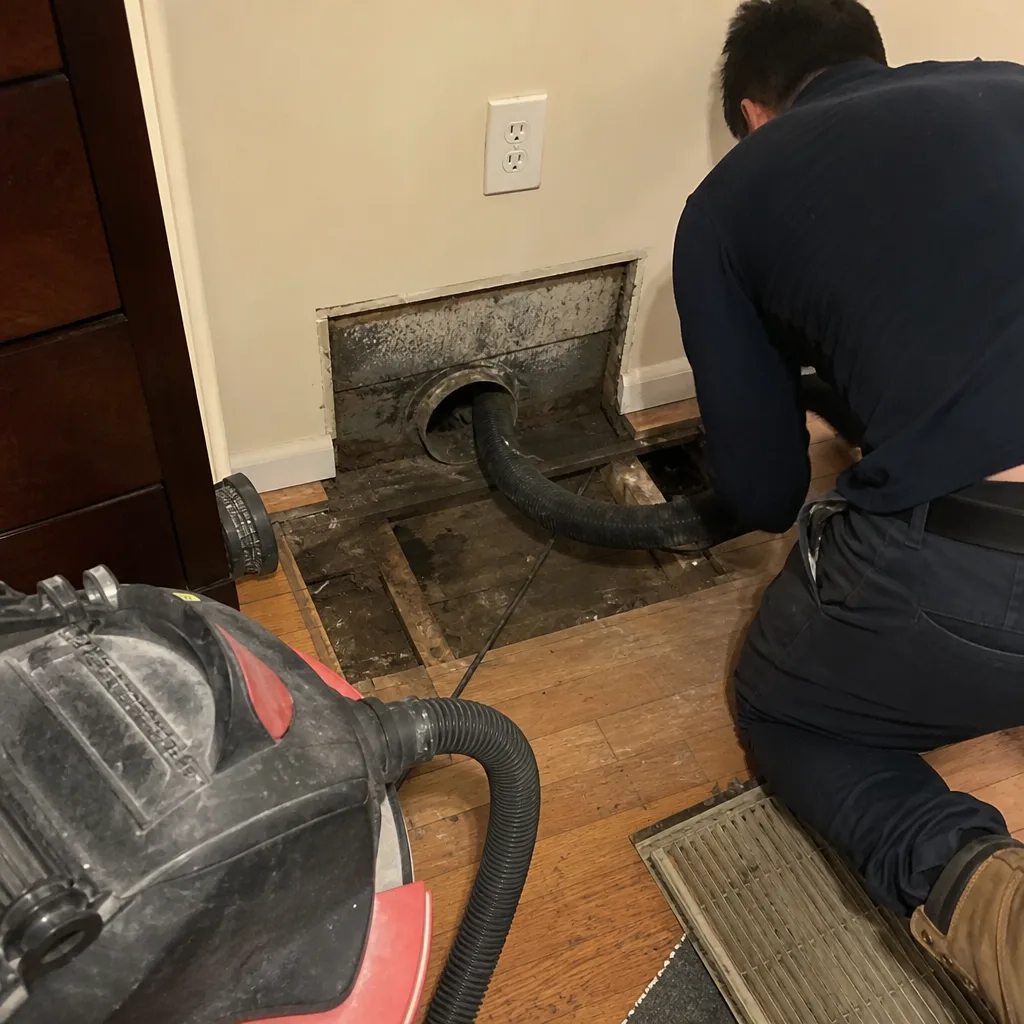 Before
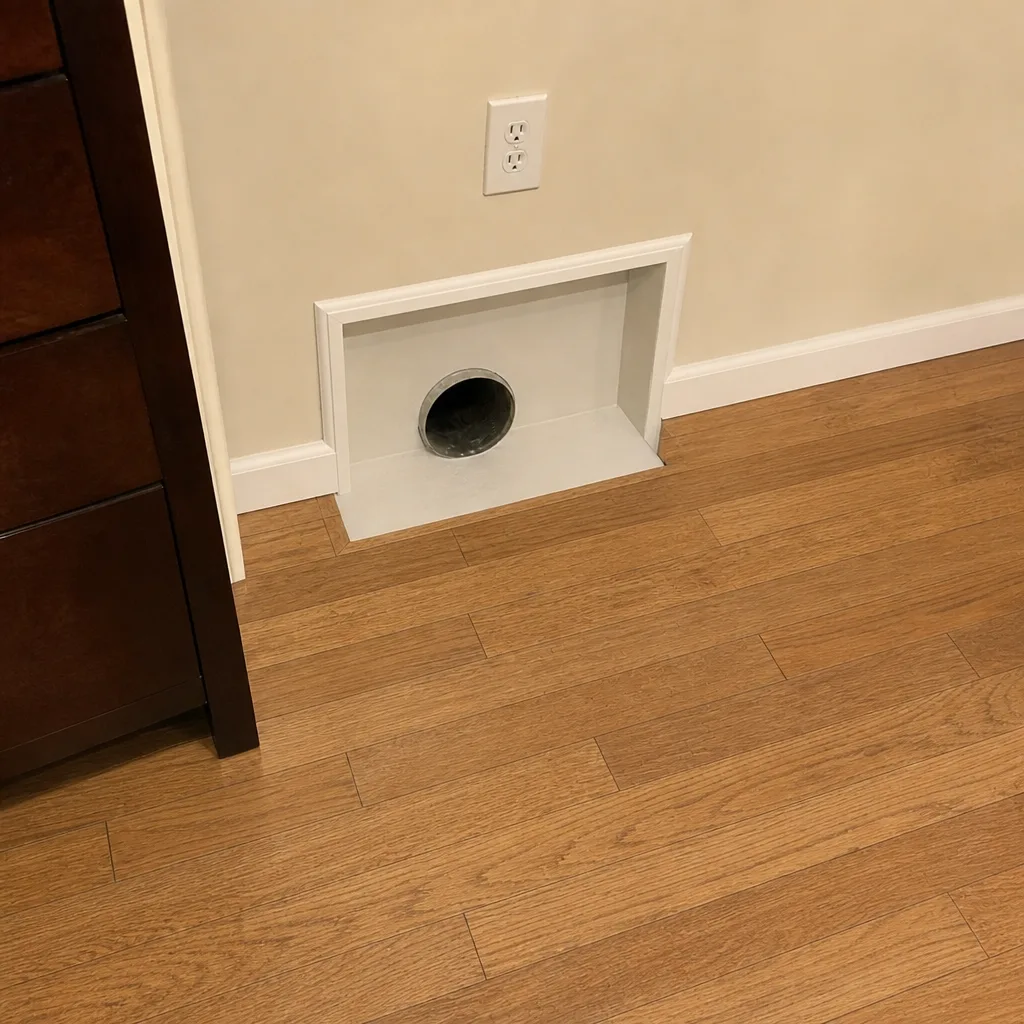 After
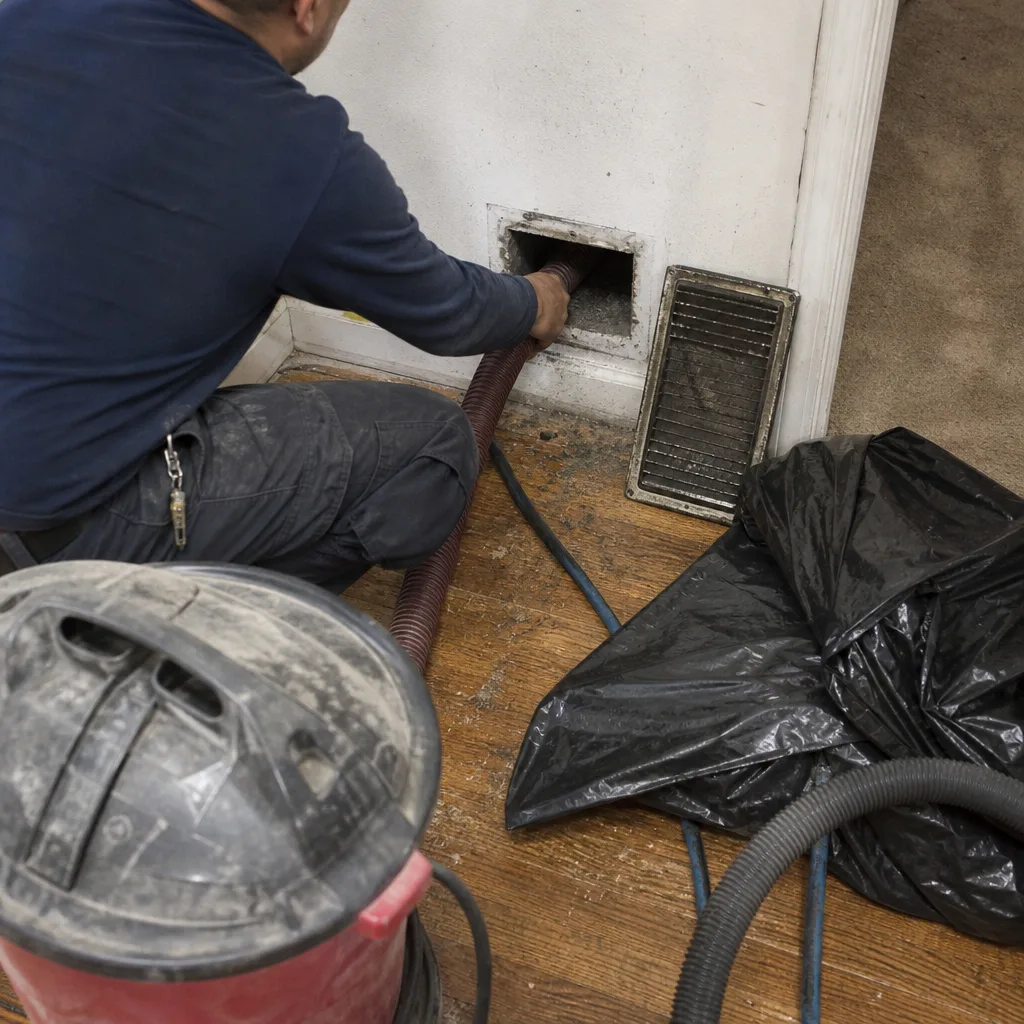 Before
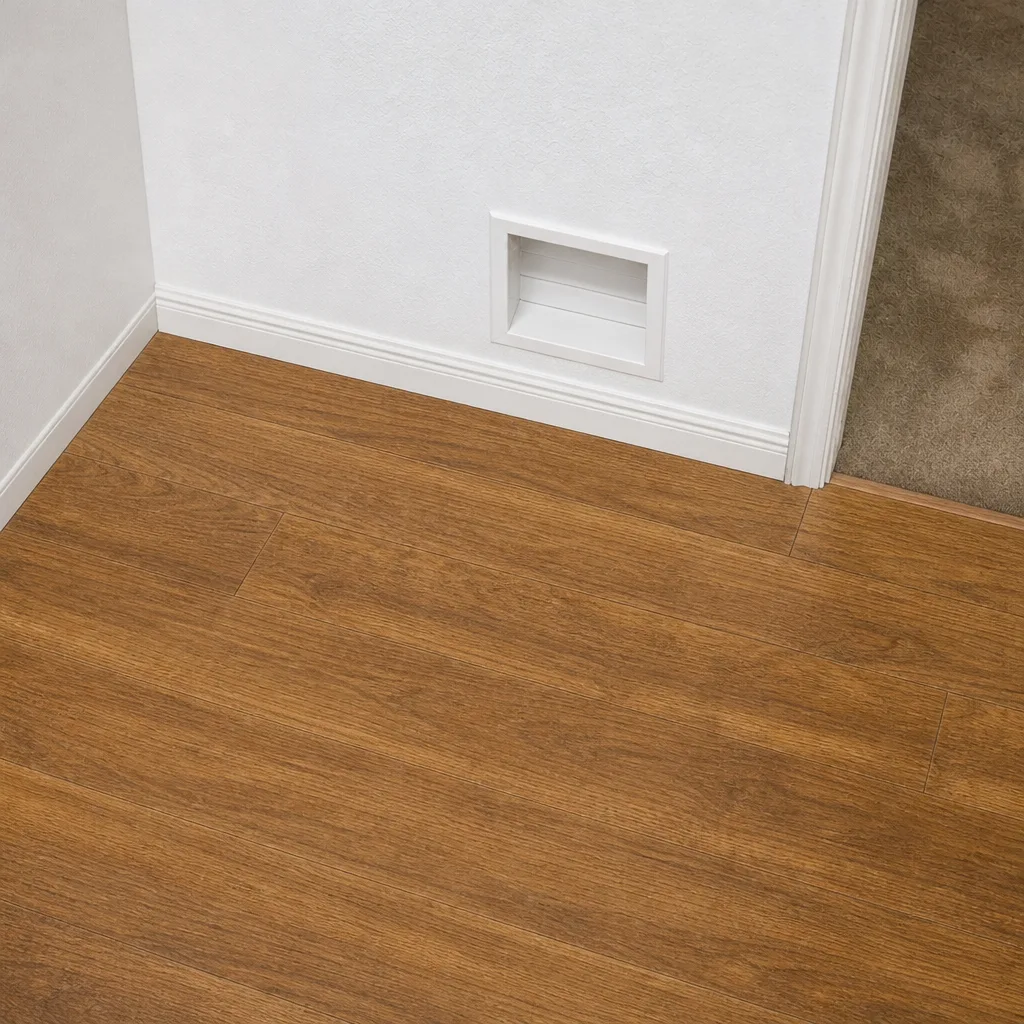 After
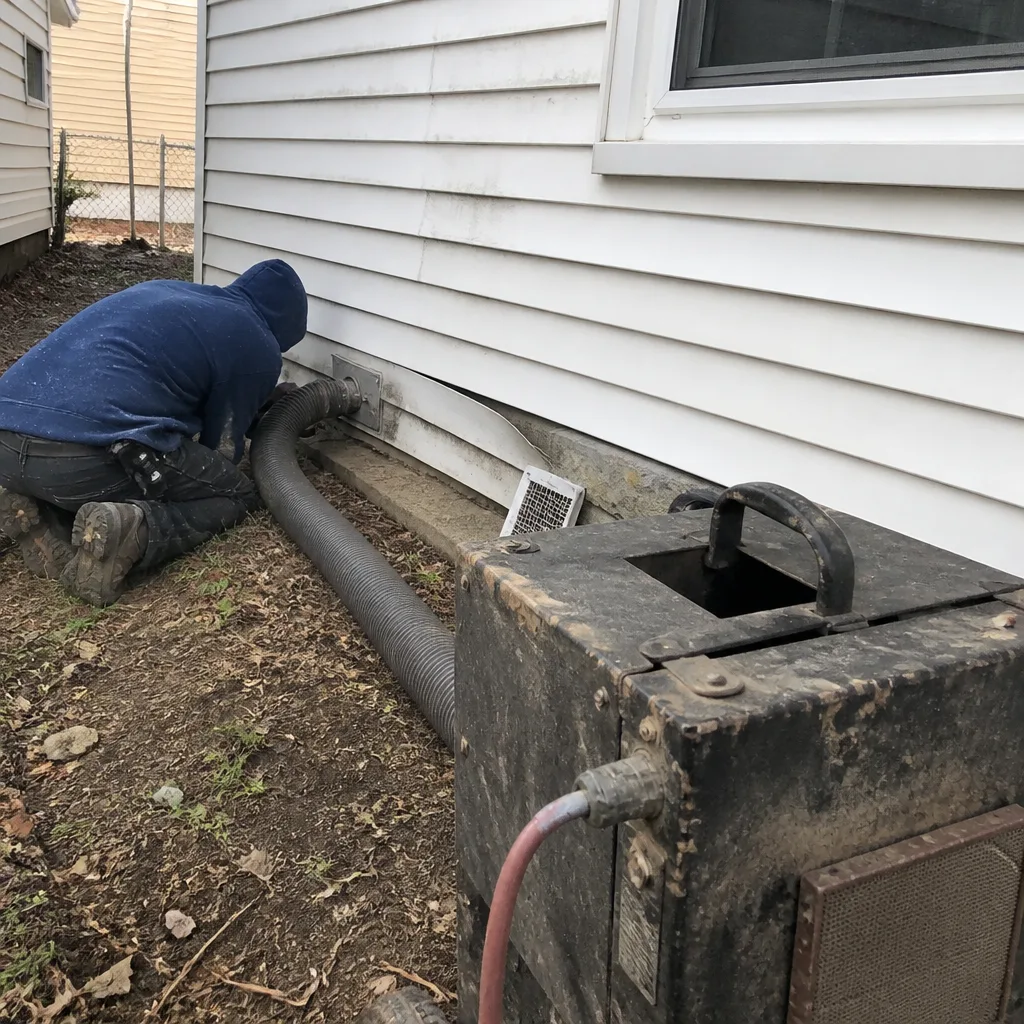 Before
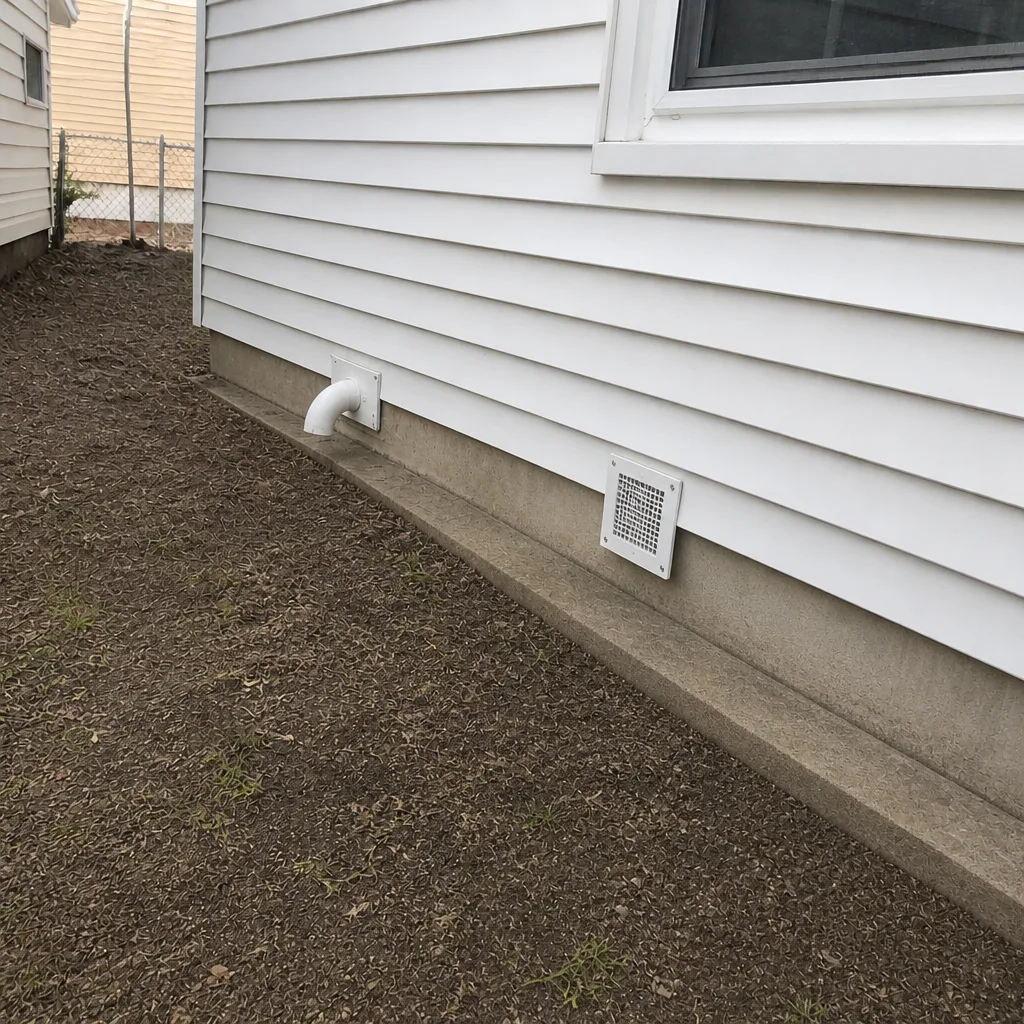 After
When to Call a Professional
Call when you have a repeat: the same room weak every month, the same smell every humid week, the same dust back on the same surface. Call after any storm that brought water into the house. Call if your monthly photos show streaking growing at a register. And call if it’s simply been three to five years since the last full cleaning, sooner if the home has flex duct that’s been in place a long time.
Air Duct Cleaning Far Rockaway offers free estimates in Far Rockaway. Call (877) 792-6089. We answer 24/7. Fast dispatch from 7am to 7pm, Sunday through Friday.
Frequently Asked Questions
Every three to five years for most homes, and sooner for homes with older flex duct, recent major renovations, pets, or any history of moisture in the system. The interval that matters is your home’s, and the checklist above is how you find it: if your monthly and seasonal checks keep turning up the same observation, the professional interval should shorten. Call (877) 792-6089 for an exact quote. Estimates are free.
You can tell when they need a look. Persistent musty odors, dust returning quickly to one room, uneven airflow, and visible streaking at registers are all signals. What you can’t do without opening the system is tell whether the problem is debris, a disconnected flex run, or condensation. That distinction decides whether you need cleaning, repair, or both.
It’s common, and it means moisture is reaching something in the duct path when the air is humid. It’s not a normal operating condition. A smell that appears on humid days and clears when the air dries is an early warning, and it’s the best time to have the system looked at.
Stop running the system, photograph the damage, and book an inspection before the next season. Water intrusion into a duct system is a remediation question, and it calls for containment and filtration during the work rather than a routine cleaning. Don’t run the blower to dry it out.
Yes. The dryer vent is a duct, it accumulates lint, and it carries the highest fire risk of any duct in the home. It’s frequently skipped by duct cleaners, which is exactly why it belongs on a homeowner’s checklist. It should be cleared on its own schedule, independent of the HVAC ductwork.
Cost is set per job by a written estimate after we’ve seen the system, so it depends on the size of the home, the number of runs, and whether repair, sealing, or sanitizing is needed alongside cleaning. There’s no per-vent pricing and no number agreed over the phone. Call (877) 792-6089 for an exact quote. Estimates are free.
The Bottom Line
A cleaning schedule without a monitoring habit is a guess. The checklist in this guide is the habit: five minutes a month on filters, registers, and odors; a seasonal pass tied to Far Rockaway’s humid summers and storm season; and a written record of what changed so the next professional visit is a diagnosis instead of a survey. Older housing stock and long-serving flex duct are the two conditions most likely to hide a problem, and both are catchable early if someone is looking. Start with this month’s check. If it turns up something, or if it’s been a while since the last full cleaning, call (877) 792-6089. We answer 24/7. Fast dispatch from 7am to 7pm, Sunday through Friday. Our technicians have up to 14 years of experience, and we work with Honeywell and Aprilaire air-quality systems when your home has them. Better air starts with what you can’t see. For a full picture of what we do, visit Air Duct Cleaning Far Rockaway.
Written by the team at Air Duct Cleaning Far Rockaway.